Customs and Cow Milk

Updated: Mar 8

Before starting the project, Ari and I schemed about a trip to Whitehorse. As nordic skiers, leaving slushy Southeast Alaska for the Yukon’s world class ski trails sounded pretty dreamy. My parents, also hard-core ski nuts, provided the car and housing. We just had to figure out how to get two weeks of local food to Canada.
The day before we left, Ari dug through our freezers and stuffed two coolers with fish, meat berries and frozen veggies. I packed over 40 sealed jars, each wrapped and nestled in my skiing clothes. After they were tucked away I trekked over to the root cellar and returned with a large duffel bag of carrots and beets to be trimmed and scrubbed. Ari went to wifi to check out the customs website.
“Potatoes are literally one of the two things they explicitly tell you NOT to bring.” He chuckled, returning to the house. “But it looks like we could buy locally grown flour in Whitehorse.”
And so it was decided. We would, for the sake of not upsetting any border agents and maintaining some major carbohydrate source, consume our first store bought food: 100% Yukon valley produced grains.
We arrived in Whitehorse, the dry cold stinging our nostrils. After lugging the heavy-as-shit food totes into our Air B&B, Ani and Ari trekked through the snow to the closest grocery store. They came home with local flour and eggs.
The next morning, we chatted with our hosts who happened to be local hay farmers and bison eaters and sauerkraut makers and crab apple pickers who happily talked our ears off about Yukon grown food. They also passed on the contact of Anne, their 81-year-old friend and neighbor who somehow coaxed milk from her cows in sub-zero temperatures.
Anne was a no nonsense type lady over the phone but said we could come stop by.
“So you’re the Alaskan girl,” she said when she opened the door. I chuckled and pet her one-eared cat while she pulled on her boots and coat and grabbed a cane. I introduced her to the rest of the crew. Anne shook hands all around and then led us to her barn, snow squeaking beneath her boots. A once-white door with a crooked sliding latch opened to the warm waft of hay, cow shit and goat piss. We walked into the low ceiling row of stalls, greeted by a chorus of bleats, grunts and mews from the 34 goats, two cows and countless cats.
Around her animals, Anne’s words started flowing. We left with a pound of butter, a two-liter bag of un-pasteurized fresh milk (according to Anne, the pasteurized milk isn’t even food), over an hour of stories from her farm career and a pungent goat odor on every article of clothing. She waved at us from the driveway, the smoked sockeye salmon we’d gifted tucked under her arm.
Hank swung our car back onto the Alaska highway. I gripped the milk bag’s ziplock top trying not to disturbed the thick layer of cream. I traveled this road almost every year of high school for ski races and running retreats. I had no idea that just a few kilometers away was this badass lady and her circus of critters.
If the Canadians allowed potatoes across the border, we’d never have met Anne. Was there ever a bureaucratic regulation that provided gifts as sweet as goat stories? And then fresh bread with butter and real cream for the first time in months just as a bonus on top?
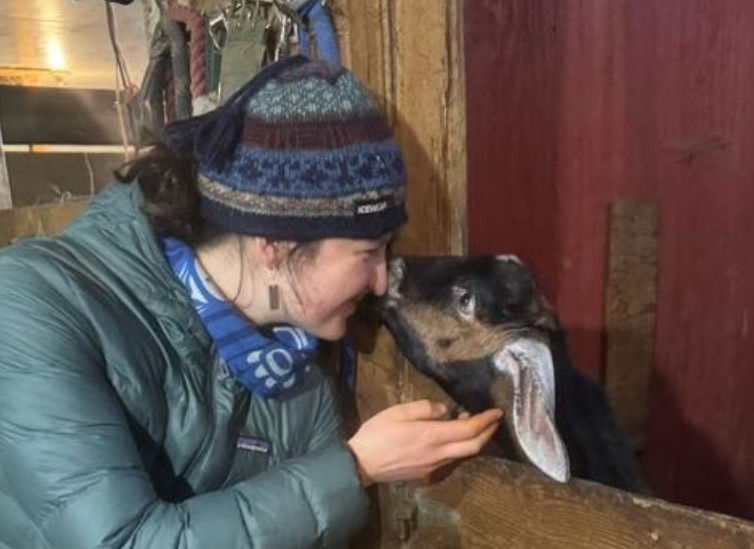


Wait… doesn’t Hank naturally smell like an old goat?? So, what’s the issue? 😂
What a delightful get away! Hope the skiing was world class!
Xoxox
My down coat still smells like goat piss ...Hank
Awesome! So glad you had a memorable trip.... KnB from the north country :)
You are an inspiration💟